Following the 65-year-old comedy icon’s raw 60 Minutes confession that she has “nothing left to hide,” top medical specialists weigh in on the terrifying, high-stakes battle against Mantle Cell Lymphoma
When screen icon Magda Szubanski sat down across from veteran broadcaster Tracy Grimshaw on 60 Minutes and declared she had “nothing left to hide,” millions of Australians held their breath.
The 65-year-old national treasure—beloved for her sharp wit, her iconic portrayal of Sharon Strzelecki on Kath & Kim, and her tireless public activism—delivered a remarkably raw, unvarnished look into her harrowing battle against a rare, aggressive form of blood cancer.
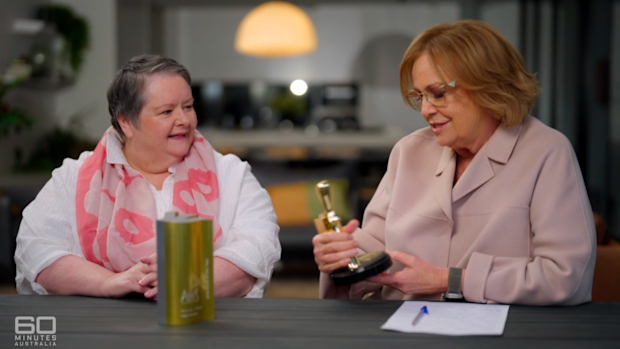
While Szubanski announced with characteristic optimism earlier this year that she had achieved clinical remission, her recent television appearance painted a far more sobering, medically daunting picture.
Addressing her condition on national television, Szubanski candidly confessed that her doctors have made one thing abundantly clear: her cancer will return. It is not a matter of if, but a terrifying equation of when and how hard.
Following her bombshell interview, leading Australian cancer specialists and medical experts have stepped forward to shed light on the brutal medical science behind Szubanski’s diagnosis, exposing the grim reality of living under what the actress described as a “Sword of Damocles hanging by a couple of strands.”
“A MULTI-CAR PILE-UP”: MEDICAL EXPERTS BREAK DOWN MANTLE CELL LYMPHOMA
Magda Szubanski was diagnosed in May last year with Mantle Cell Lymphoma (MCL)—an exceptionally rare, highly aggressive subtype of non-Hodgkin lymphoma that develops in the outer edge (the mantle zone) of the lymph node follicles.
According to prominent Australian blood cancer specialists, MCL represents one of the most challenging clinical management scenarios in modern oncology.
While standard chemotherapy regimens can induce temporary remission, the disease possesses a biological resilience that almost universally evades permanent eradication.
“Mantle Cell Lymphoma is a unique beast in the hematological world,” explains a leading Sydney-based senior oncologist and clinical researcher.
“It combines the aggressive, fast-growing nature of high-grade lymphomas with the incurable, persistent tendencies of low-grade conditions.
When a patient enters remission, the microscopic disease often remains dormant in the bone marrow, waiting for the opportunistic moment to re-emerge.”
During her 60 Minutes tell-all, Szubanski described the horrifying physical symptoms that preceded her official diagnosis, recalling a sensation where her very bones felt like they were “splitting”—a direct result of severe bone marrow inflammation.
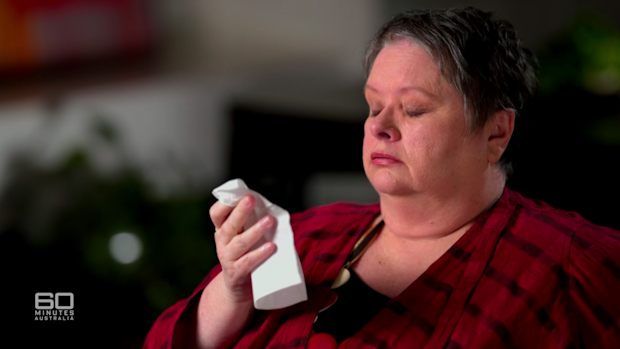
She recounted waking up in the middle of the night to a haunting internal voice whispering, “you’re dying, you’re dying.”
Medical experts confirm that bone marrow involvement is a classic hallmark of advanced MCL, causing intense skeletal pain and severe systemic disruption.
To combat the malignancy, Szubanski underwent aggressive chemotherapy—a treatment process she bluntly likened to a total immune system annihilation.
“Chemotherapy for Mantle Cell Lymphoma is exceptionally punishing,” the specialist notes.
“It essentially wipes out the patient’s entire hematopoietic system.
Magda’s description of it being like a ‘multi-car pile-up’ is medically spot-on.
It annihilates the immune infrastructure to purge the malignant cells, leaving the body entirely defenseless during recovery.”
THE MEDICAL TIMELINE: UNDERSTANDING THE MEDIAN SURVIVAL RATE
One of the most heart-stopping moments of Szubanski’s interview arrived when she casually broken down her statistical prognosis on camera.
“It’s an incurable relapse in cancer,” Szubanski told Tracy Grimshaw.
“So, it’s almost sure that it will come back.
It’s a question of ‘when’ and then ‘how bad’… The median survival rate is eight-and-a-half years.
So, I could go less, or I could go more.”
With her trademark resilience, Szubanski joked that she intended to “pitch for more,” but top oncologists warn that navigating an incurable relapse requires an entirely different mental and physical state of awareness.
Leading medical commentators, including Professor Miles Prince AM, Director of the Centre for Blood Cell Therapies at Melbourne’s Peter MacCallum Cancer Centre, emphasize that while an eight-and-a-half-year median survival rate offers a temporal window, the quality of life and treatment fatigue during relapse cycles present immense clinical hurdles.
“When we talk about a median survival rate in MCL, we are factoring in targeted therapies, maintenance immunotherapy, and potential clinical trials,” a prominent Australian hematology professor explains.
“However, each subsequent relapse becomes progressively harder to treat.
The cancer cells adapt, mutate, and build resistance to frontline chemotherapy drugs.
Magda is entering a phase where constant surveillance is required.”
This lingering threat is precisely what Szubanski described as a shift in human consciousness—a stark, non-abstract awareness of mortality that few people ever have to confront so directly in their daily lives.
A CURSED GENETIC LEGACY: THE FAMILY HEALTH PATTERN
Beyond the immediate biological reality of her tumor, medical professionals point to Szubanski’s extraordinary and tragic family medical history as a subject of intense scientific interest.
During the broadcast, the actress laid bare a history littered with oncology battles.
Her father was diagnosed with cancer when she was just six years old.
Her mother eventually succumbed to pancreatic cancer, while her sister is currently fighting her own battle with lymphoma.
In a moment of dark, cathartic humor, Szubanski quipped that her brother was the “fking odd one out” simply because he survived a heart attack and a quintuple bypass rather than a cancer diagnosis.

Geneticists and medical researchers note that while Mantle Cell Lymphoma is generally considered a sporadic disease rather than a directly inherited genetic condition, a dense family history of diverse malignancies often points to underlying familial gene susceptibility or shared environmental markers.
“When you see a family tree populated by pancreatic cancer, lymphomas, and early-onset malignancies, it raises immediate clinical flags regarding broader DNA repair mechanisms,” oncology experts observe.
“Magda’s fortitude in the face of what seems like a generational health curse is nothing short of heroic.”
UNBURDENING THE SOUL: TRAUMA, SHAME, AND THE WILL TO LIVE
While the medical prognosis dominated health headlines, the emotional climax of the 60 Minutes interview saw Szubanski confront an entirely different kind of poison: a decades-old childhood trauma secret.
For the first time in her public life, Szubanski revealed she had been sexually abused as a young child by older boys—an experience that led to manipulation, confusion, and being locked in a backyard wardrobe under the scorching midday sun.
She courageously admitted to the deep, lingering shame of having later replicated that behavior as a confused child before understanding the nature of the trauma.
Speaking out on national television, she described a profound sense of spiritual relief—as if shedding the secrecy stripped the trauma of its ultimate power over her remaining years.
“I can’t believe I’m saying all this stuff on national television, but I’m also 65, and I’ve got cancer, and who fking cares?” Szubanski stated passionately.
“If there’s anything that I know that’s gonna help someone else, I don’t know how long I’ve got, I’m gonna bloody share it.”**

Psychological and medical professionals alike have lauded her openness, noting that processing deep-seated psychological trauma can significantly reduce chronic physiological stress responses, offering patients a cleaner mental runway as they face grueling physical treatments.
A NATION RALLIES BEHIND A NATIONAL TREASURE
Despite the terrifying medical reality mapped out by top Australian doctors, Magda Szubanski refuses to retreat into darkness.
Her sporadic public appearances—including her hilariously chaotic, show-stealing spot at the 2026 Logie Awards alongside Robert Irwin, where she donned bandages and a sling to joke about tiger enclosures—prove that her comedic spirit remains completely untouched by chemotherapy.
As Australia’s medical community continues to monitor her remission, top oncologists remain cautiously hopeful that emerging targeted therapies and novel immunotherapies will allow Szubanski to far exceed that eight-and-a-half-year median statistic.
Magda Szubanski has spent a lifetime making Australia laugh, advocating for equality, and wearing her heart on her sleeve. Now, as she stands on the frontlines of an incurable medical battle, her courage in laying bare the brutal truth of her prognosis serves as an inspiration to cancer patients across the globe.