Acclaimed melanoma expert and former Australian of the Year Professor Richard Scolyer will receive a state funeral, Prime Minister Anthony Albanese has confirmed.
Scolyer died aged 59, after years of defying the odds against a terminal brain cancer diagnosis with a treatment he and a colleague designed themselves.
He penned an open letter, which was published at midnight, in which he reflected on his life, family, incredible achievements and revealed he’d like to be remembered as a “proud everyday Aussie who ‘gave it a crack’“. You can read the letter in full below.
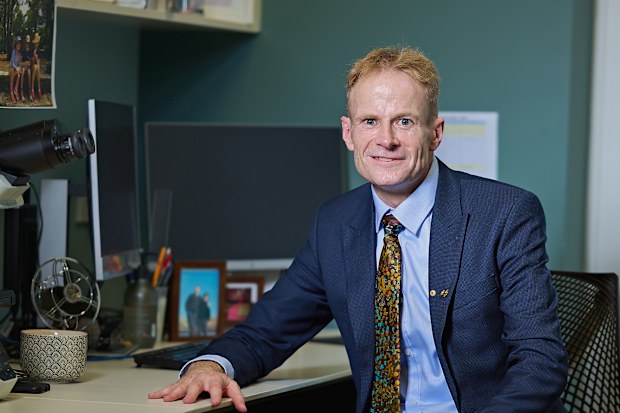
Acclaimed melanoma expert and former Australian of the Year Professor Richard Scolyer has died, aged 59. Flavio Brancaleone
Prime Minister Anthony Albanese has also led tributes to Scolyer this morning, calling him a “remarkable man”.
Speaking to reporters, he confirmed he had spoken to Scolyer’s wife, Dr Katie Nicholl, and that she had accepted the offer of a state funeral.
Scolyer was diagnosed with a grade four glioblastoma in 2023 and was given months to live.
He and Professor Georgina Long pioneered immunotherapy research, transforming the way melanomas are treated, which, in a world-first, was used to treat his brain cancer.
The cancer returned in February last year and last month his wife, Katie, admitted things were “steadily getting harder for Rich”.
Scolyer described his message to Australia as a “final goodbye” following a “life filled with happiness, optimism, opportunity and passion”.
“I’ve spent the last three years being open and honest about my journey with glioblastoma (brain cancer), in part to be transparent about what cancer patients and their families go through, and in part to provide hope and inspiration that we can and should continue to push boundaries to propel the cancer field forward,” he wrote.
“Having dedicated my 35-year working life to patient care, cancer research and improving lives, I wanted to keep contributing, even in my darkest hour.
“I am extremely proud of my impact – from my lifelong career as a world-leading melanoma pathologist and cancer researcher, to being the first patient to receive experimental brain cancer treatment based on melanoma science I helped develop, followed by participation in development of a brain cancer clinical trial and advocacy for greater investment in brain cancer research.”
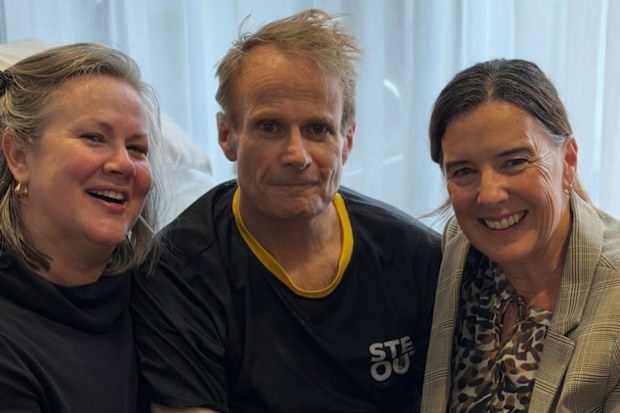
Professor Richard Scolyer’s wife Dr Katie Nicholl shared this photo alongside an update as he continues to battle brain cancer. Instagram/@profrscolyer
Scolyer said he wanted others to keep building on his research and paid tribute to his “wonderful” family, noting the impacts his cancer fight had on loved ones.
“I cannot thank my beautiful wife Katie and my adored children Emily, Matthew and Lucy enough for their love, their support, their strength, and their compassion,” Scolyer said.
“They are shining examples of the best of humanity and make me extremely proud.
“Much love also to my elderly Mum and Dad in Tasmania, my brother Mark and many friends for their strength and support, particularly during these recent years.
“My childhood was full of adventures built on ‘how’, not ‘if’, which set me on a path to being inquisitive and truly believing nothing is impossible.”
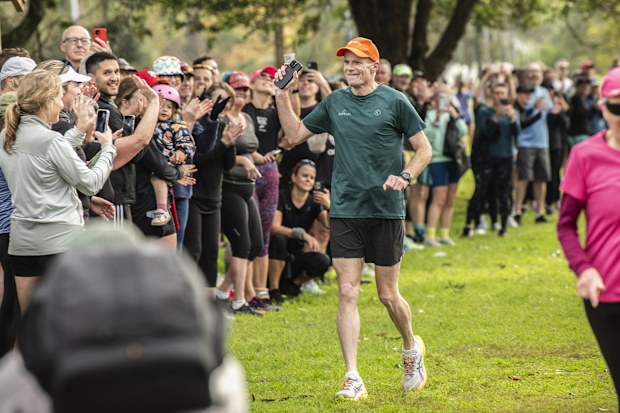
Scolyer reached his 250th Parkrun in June last year Steven Siewert
Scolyer listed his proudest achievements as generating new evidence ultimately leading to life-saving advances in melanoma diagnosis and treatment, helping to start the world’s largest melanoma biobank and becoming the world’s most published melanoma pathologist, among other astounding achievements.
He and Long were named Australians of the Year in 2024 for their breakthrough world-first melanoma cure.
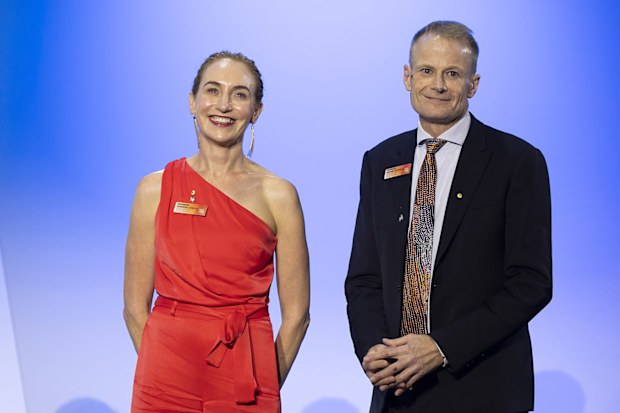
2024 NSW Australians of the Year, Professor Georgina Long and Professor Richard Scolyer, pose for photos ahead of the 2024 Australian of the Year awards ceremony at the National Arboretum in Canberra Alex Ellinghausen
He urged researchers to remain inquisitive and brave, cancer patients to consider enrolling in clinical trials and for governments and the wider community to keep funding science.
“Perhaps the greatest lesson to come from these last three years is that cancer does not define us. It may be the current road we are travelling, but it is not our entire journey,” Scolyer wrote.
“A terminal cancer diagnosis does however provide clarity as to what truly matters. It shines a spotlight on the importance of relationships, on true friendship and on selflessness.”
Albanese’s office issued a statement praising Scolyer this morning, with the prime minister saying Australia had “lost one of our brightest lights and one of our biggest hearts”.
“Every day, this remarkable man – the cancer specialist who became his own subject – took us into his confidence, and he lifted us all in the process,” Albanese’s statement read.
“Richard’s journey was difficult and confronting. ‘My uncertain path’, as he termed it with characteristic understatement.
“Yet it was one he travelled with courage, determination, and a grace that never ceased to be remarkable. The way he shared it with us was an act of profound generosity. He showed us what it means to hope, and to keep searching for solutions. He showed us how to stand firm against fear and stay true to yourself.
“Now Richard’s journey is done, yet his legacy will always be with us. The recently established Richard Scolyer Chair at the Chris O’Brien Lifehouse proudly bears his name. And one day when a cure is found, Richard’s name will be spoken.
“The hearts of all Australians go out to his wife, Dr Katie Nicholl, and their children, Emily, Matthew and Lucy.
“And may Richard Scolyer rest in peace.”
Vale Professor Richard A Scolyer AO 16 December 1966 – 7 June 2026
An open letter to all Australians
From Professor Richard A Scolyer AO
My fellow Australians,I pen this letter as a final goodbye to all those I have had the immense privilege of loving, sharing life’s adventures with, working alongside and meeting during what can only be described as a life filled with happiness, optimism, opportunity and passion.
My intention is for this letter to be published upon my passing – as my final farewell.
I’ve spent the last three years being open and honest about my journey with glioblastoma (brain cancer), in part to be transparent about what cancer patients and their families go through, and in part to provide hope and inspiration that we can and should continue to push boundaries to propel the cancer field forward.
Having dedicated my 35-year working life to patient care, cancer researchand improving lives, I wanted to keep contributing, even in my darkest hour.
I am extremely proud of my impact – from my lifelong career as a world leading melanoma pathologist and cancer researcher, to being the first patient to receive experimental brain cancer treatment based on melanoma science I helped develop, followed by participation in development of a brain cancer clinical trial and advocacy for greater investment in brain cancer research.
I sincerely hope the scientific data and awareness I have generated will provide a platform for others to build upon to ultimately make a difference for future cancer patients.
I am perhaps lucky that the physical and cognitive impacts of the final stages of brain cancer mean that I am unlikely to have been aware of my own decline over these final weeks. I write this knowing that my wonderful family would have been by my side every minute, as they have been throughout my cancer journey.
Like all families living with cancer, the impacts have been far wider than just on me.
Since my diagnosis in May 2023, our family has been thrown challenges that we didn’t plan or want. But those same challenges have also drawn us closer and reinforced that family is everything.
I cannot thank my beautiful wife Katie and my adored children Emily, Matthew and Lucy enough for their love, their support, their strength, and their compassion.
They are shining examples of the best of humanity and make me extremely proud.
Much love also to my elderly Mum and Dad in Tasmania, my brother Mark and many friends for their strength and support particularly during these recent years.
My childhood was full of adventures built on “how”, not “if”, which set me on a path to being inquisitive and truly believing nothing is impossible.
If you will allow me one final indulgence, composing this letter encouraged me to reflect proudly on my role in generating new evidence ultimately leading to life-saving advances in melanoma diagnosis and treatment.
I helped start what is now the world’s largest melanoma biobank, became theworld’s most published melanoma pathologist authoring over 1,000 research publications, and lectured hundreds of times at conferences across the globe.
I am also proud to have held leadership roles at the American Joint Committee on Cancer and the World Health Organisation and many other international organisations.
In addition to my roles in the development of breakthroughs in melanoma treatment, including immunotherapy, and the subsequent soaring of advanced melanoma survival rates, my mentoring of the next generation of clinical doctors (including pathologists) and cancer researchers has perhaps been the greatest reward to come from my life’swork.
I have always been driven by the belief that we all have a responsibility to try to change the future for others and leave the world a better place.
From mentoring PhD students in the translational research lab and early career clinicians in hospitals, to taking on the undeniably risky experimental treatment for brain cancer and undergoing swathes of voluntary medical tests purely to advance scientific knowledge of brain cancer – I have lived that ethos to the fullest.
I was incredibly humbled when the federal government recently named the Chair in Brain Cancer Research at the Chris O’Brien Lifehouse in my honour.
Such public accolades have never sat entirely comfortably with me, but I am delighted that much-needed brain cancer research will continue to be funded long after I have gone.
To my research and clinical colleagues, I implore you to stay inquisitive and brave and keep striving to break new ground. To all cancer patients, I encourage you to consider enrolling in research and clinical trials, if on offer. And to government and the wider community, please keep funding science and medical research. This is the most impactful way that you too can make a difference.
Perhaps the greatest lesson to come from these last three years is that cancer does not define us. It may be the current road we are travelling, but it is not our entire journey.
A terminal cancer diagnosis does, however, provide clarity as to what truly matters.
It shines a spotlight on the importance of relationships, on true friendship and on selflessness.
Whilst cancer may not define us, our ability to empathise with and have compassion towards others does. That is true in all facets of life, and I am confident those traits will continue to guide Australians towards acceptance and support for all.
My final message to all Australians is to say thank you for your outpouring of love and support for me and my family.
Those of you I met during my travels as joint 2024 Australian of the Year, my amazing online community which spans many countries, and of course my hometown Tasmanians – you’ve laughed with me, cried with me, and provided encouragement and support to keep going just when I needed it most.
I haven’t sugar-coated my journey and I sincerely thank you for allowing me thespace and opportunity to share it with you, warts and all.
I hope I have in some small way made the road ahead easier and smoother for others.
If my legacy was to continue beyond these words, I would be delighted and humbled to be remembered as a proud everyday Aussie who “gave it a crack”, and in doing so, inspired others to pursue their dreams and passions with humility, love and compassion.
With much love and gratitude,
Richard.
Source: www.nine.com.au/australia-news/pioneering-scientist-and-former-australian-of-the-year-professor-richard-scolyer-dies-age-59-20260608-p604o1